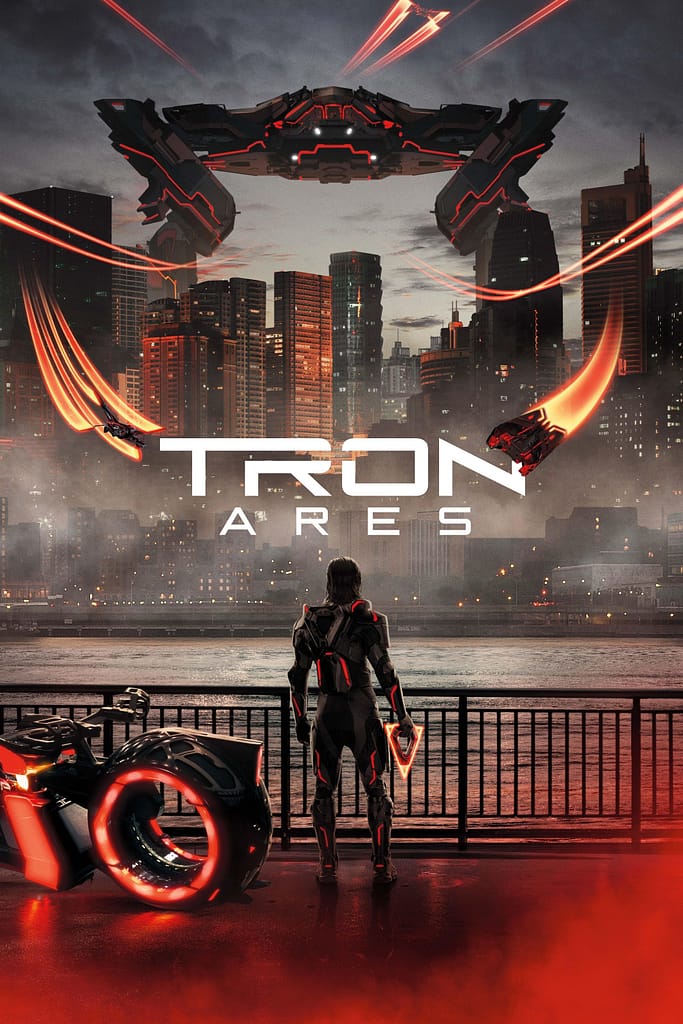




My quick rating – 6.9/10. As someone who used to pump a small fortune into the original Tron stand-up arcade cabinet, I walked into Tron: Ares wondering if that same neon-lit magic could ever be recaptured. Shockingly, it not only taps into that nostalgia, but it also recharges it like a fresh power cell. The film hits the ground running with a gorgeous introduction to the digital frontier when Julian (Evan Peters) attempts to infiltrate ENCOM’s system. This opening sequence is exactly what I wanted, a reminder of why the Grid has always been such a strangely mesmerizing and enticing place. Even with today’s hyper-polished CGI, the movie still pays respect to the groundbreaking style of 1982. I could practically hear my younger self begging for another quarter.
Jared Leto’s Ares is a highly sophisticated program yanked from the digital world and sent into ours. This sets the tone for a story that isn’t afraid to blur lines between reality, tech, and the philosophical rabbit holes we’re already tumbling toward in real life. Gillian Anderson as Elisabeth Dillinger brings a cold corporate weight to the screen as the next-generation figure trying to steer her father’s legacy. Meanwhile, Greta Lee shines as Eve Kim, ENCOM’s CEO, whose discovery of Flynn’s long-abandoned Alaskan outpost gives the entire plot its spark. The “permanence code” concept, the idea of breaking the 29-minute deresolution limit, is classic Tron science: half metaphysics, half techno-dream.
And yes, the moment we see lightcycles in the real world is as awesome as you’d hope. Using light trails to slice a car clean in half? That’s the kind of joyful digital violence that reminds me how many opponents I boxed in on that glowing arcade grid. Add in a Nine Inch Nails soundtrack pulsing underneath, and it’s a neon fever dream in the best possible way.
But the real magic happens when Ares travels back into an ’80s-style Grid. The filmmakers knew exactly what they were doing here – old-school lightcycles, retro aesthetics, and that unmistakable synth-driven vibe. Goosebumps. Real ones. Bit even makes a return, and somewhere in the universe a million fans whispered “YES/NO” at the same time. And of course, Jeff Bridges appears as Kevin Flynn, because you simply cannot call it a Tron movie without the digital sage himself materializing.
Visually, the movie is spectacular from beginning to end. Recognizers in a downtown cityscape shouldn’t work… yet somehow absolutely do. And beneath all the glow, the story threads in real conversations about AI, emotions, and what it means when our creations start wanting things. The ending tees up a sequel with confidence, and the mid-credits stinger is important enough that leaving early should be considered a derezzable offense.
As a lifelong fan, I ended up quite thrilled. Tron: Ares doesn’t just honor the legacy, it evolves it.